Is Coursera Certificate Worth It? Does it have validity? Who hasn’t asked themselves these kinds of questions? In my particular case, after a month in Linkedin Learning and paying the annuity to follow my training processes, where I emphasize of course SEO, Marketing and complementary subjects such as WordPress and many soft skills.
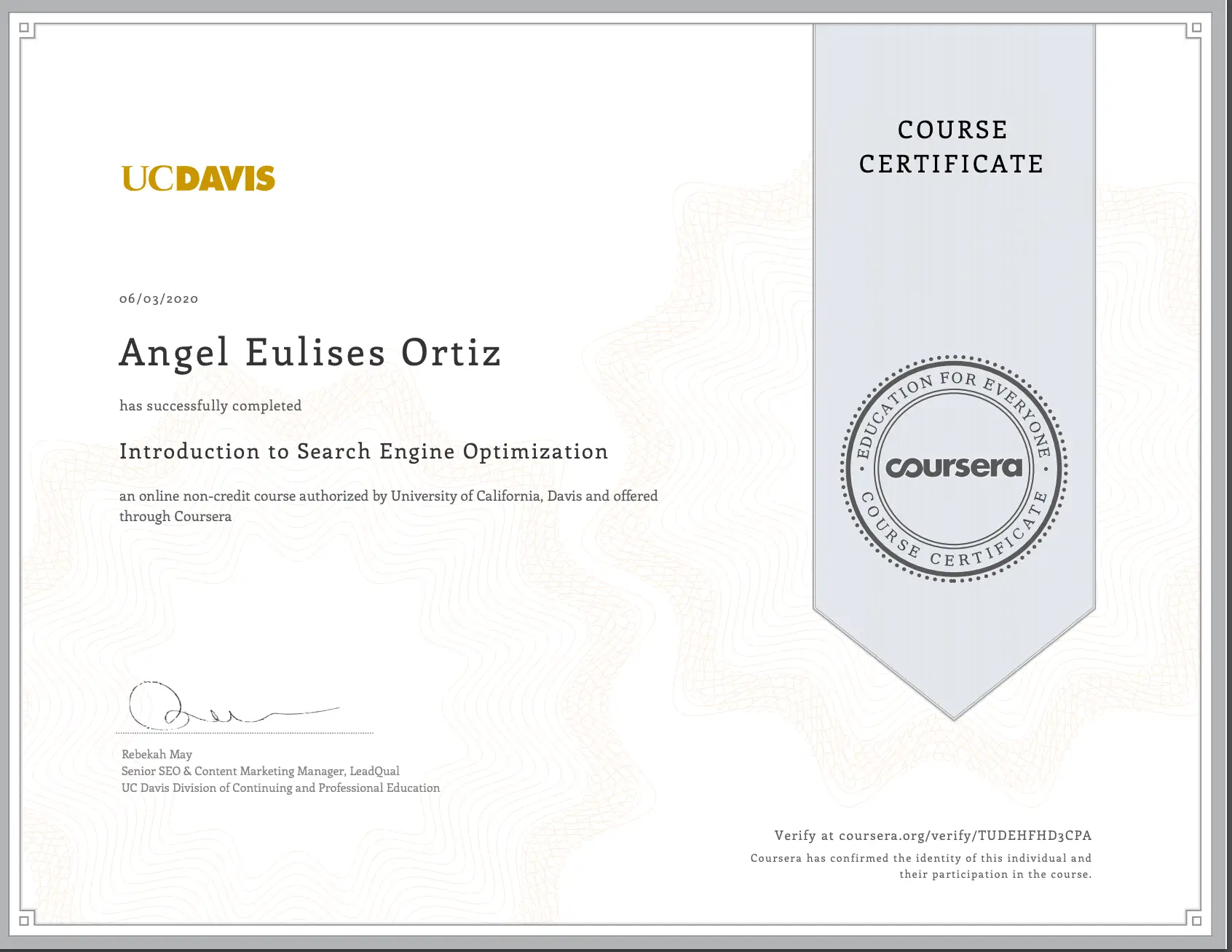
Table of Contents
Introduction: The Dilemma of Online Credentials
In the rapidly evolving landscape of digital education, one question persists among professionals, career switchers, and lifelong learners alike: Is a Coursera certificate worth it? Does it hold validity in the eyes of hiring managers, or is it merely a digital badge of participation? I have asked myself this question repeatedly throughout my career. Today, after navigating the platform extensively, completing multiple specializations, and earning a Professional Certificate as an AI Product Manager with IBM via Coursera, I am ready to provide a definitive, data-driven answer.
The skepticism surrounding online learning is understandable. The internet is flooded with courses, some offering little more than a PDF upon completion. However, Coursera operates differently. It partners with top-tier universities like Yale, Stanford, and the University of Pennsylvania, alongside industry giants like Google, IBM, and Meta. This hybrid model of academic rigor and practical industry application creates a unique value proposition. But does it translate to career growth?
In this comprehensive guide, I will dissect the Coursera ecosystem from the perspective of a North American industry expert. We will explore the validity of these certificates, the return on investment (ROI), how to leverage them for job interviews, and my personal experience with the IBM AI Product Manager certification. Whether you are looking to upskill in data science, pivot to project management, or master artificial intelligence, this article will serve as your strategic roadmap.
Understanding the Coursera Ecosystem: More Than Just Videos
To understand the value of the certificate, you must first understand the platform’s structure. Coursera is not a monolith; it offers various types of credentials, each carrying different weight in the job market. Confusing these can lead to misplaced expectations.
Types of Coursera Credentials
Individual Courses
These are single modules focused on a specific skill, such as “Python for Everybody” or “Introduction to SEO.” Completing these grants a course certificate. While useful for learning, individual course certificates often carry less weight on a resume compared to larger programs. They are best used to fill specific skill gaps rather than as a primary credential.
Specializations
A Specialization is a series of related courses designed to master a specific topic. For example, the “Google Data Analytics Professional Certificate” is often categorized here, though it functions similarly to a Professional Certificate. Specializations usually involve a capstone project where you apply your skills to a real-world scenario. This is where the value begins to spike because you have tangible proof of work.
Professional Certificates
This is the gold standard for career-focused learners on Coursera. Created by industry leaders like Google, IBM, and Meta, these programs are designed to prepare you for a specific job role. They often do not require a prior degree and focus heavily on practical tools and workflows. As an holder of the IBM AI Product Manager Professional Certificate, I can attest that these programs are rigorous and aligned with current industry demands.
MasterTrack Certificates and Degrees
For those seeking academic credit, Coursera offers MasterTrack certificates, which are portions of master’s degree programs that can sometimes be credited toward a full degree if you are admitted to the university later. They also offer full online degrees from partner universities. These carry the most academic validity but come with a significantly higher price tag and time commitment.
The Partner Network Advantage
The core validity of Coursera stems from its partners. When you earn a certificate from the University of California, Davis, or IBM, you are not just getting a stamp from Coursera; you are getting endorsement from the institution itself. This distinction is crucial for Background Checks and HR verification.
In my experience, hiring managers recognize the logos of these partners. Seeing “IBM” or “University of Michigan” on a resume triggers a recognition of quality standards. It signals that you have undergone training that meets the benchmarks set by these organizations. This is fundamentally different than completing a course on an unknown platform where the curriculum quality is unverified.
Validity and Accreditation: Do Employers Care?
The million-dollar question remains: Do employers actually care about Coursera certificates? The answer is nuanced but generally positive, provided you know how to present them.
The Shift in Hiring Practices
The modern hiring landscape, particularly in North America and Europe, has shifted towards skills-based hiring. Companies are increasingly less concerned with where you went to college and more concerned with what you can do. A Coursera Professional Certificate demonstrates current, relevant skills. For example, a traditional computer science degree might teach you the theory of algorithms, but an IBM Coursera certificate might teach you how to deploy those algorithms using specific cloud tools used in 2026.
ACE Credit Recommendations
One of the strongest indicators of validity is the American Council on Education (ACE) credit recommendation. Many Coursera courses and Professional Certificates have been evaluated by ACE and recommended for college credit. This means that the curriculum has been vetted by an accredited body to meet higher education standards.
While not all universities accept these credits for transfer, the mere existence of an ACE recommendation adds a layer of academic legitimacy to the certificate. It moves the credential from “informal training” to “credited learning.” For employees seeking tuition reimbursement from their current companies, this accreditation is often the key to getting funding approved.
Verification and Authenticity
A common concern among recruiters is fraud. Can anyone just claim they have a certificate? Coursera addresses this with unique verification links. Every certificate comes with a unique URL and a serial number. When you list a certificate on your LinkedIn profile or resume, you can provide this link.
I have personally verified certificates for team members during hiring processes. The verification page shows the learner’s name, the date of completion, the instructor’s signature, and the partner logo. This transparency builds trust. It shows that you have nothing to hide and that your achievement is digitally verifiable. In an era of resume inflation, this verifiability is a significant asset.
My Personal Journey: The IBM AI Product Manager Certificate
To provide practical value, I want to share my direct experience with the IBM AI Product Manager Professional Certificate. This program was a pivotal moment in my career transition towards integrating Artificial Intelligence into strategic business planning.
Why I Chose This Program
As a strategic consultant, I noticed a gap in the market. Many businesses wanted to implement AI, but they lacked product managers who understood both the business strategy and the technical limitations of AI models. Traditional MBA programs were too broad on the business side and too weak on the technical AI side. Computer science programs were the opposite. The IBM Professional Certificate promised a bridge between these two worlds.
Curriculum Deep Dive
The program consisted of several courses covering the AI lifecycle, data management, and ethical considerations.
Practical Tooling
One of the most valuable aspects was the hands-on experience with tools. We didn’t just read about machine learning; we utilized platforms to build models. We worked with Watson Studio and learned how to manage the deployment of AI solutions. This practical exposure meant that when I spoke with engineering teams, I spoke their language. I understood the constraints of data cleaning and model training.
Ethical AI Frameworks
A significant portion of the course focused on AI ethics. In 2026, this is critical. Companies are facing increasing scrutiny regarding bias in algorithms and data privacy. The certificate program provided frameworks for assessing risk and ensuring compliance. This knowledge allowed me to advise clients not just on how to build AI, but how to build it responsibly. This specific skill set became a unique selling point in my consulting pitches.
The Capstone Project
The program culminated in a capstone project where I had to design an AI product strategy from scratch. I created a proposal for a predictive analytics tool for e-commerce. This project became a centerpiece of my portfolio. During interviews, instead of just talking about my skills, I could walk interviewers through this project, showing my thought process, my strategic planning, and my technical understanding.
The Career Impact
After completing the certificate, I updated my LinkedIn profile and resume. Within two months, I noticed a shift in the inbound inquiries I received. Recruiters specifically mentioned the IBM certification as a point of interest. It validated my claim of being an “AI Product Manager.”
Furthermore, the confidence gained from the course allowed me to lead internal initiatives at my company. I was able to spearhead a project to automate customer service queries using NLP, directly applying the concepts learned. The ROI was immediate: the certificate cost a fraction of a traditional executive education program but delivered comparable strategic value.
Financial Analysis: Cost vs. Value
Let’s talk about money. Education is an investment, and like any investment, you need to calculate the ROI.
Coursera Plus vs. Individual Purchase
Coursera offers a subscription model called Coursera Plus. For an annual fee, you get unlimited access to most courses and Professional Certificates. Alternatively, you can pay per course or per certificate.
The Subscription Model
If you plan to complete multiple certificates within a year, Coursera Plus is the clear winner. For example, if you complete the Google Data Analytics certificate and the IBM AI Product Manager certificate within a year, the subscription saves you hundreds of dollars. It also encourages continuous learning. You are not penalized for taking extra time to learn a difficult concept.
Financial Aid
Coursera offers financial aid for learners who cannot afford the fee. The application process requires writing a few short essays explaining your need and how the course will help your career. In my experience, and based on community reports, approval rates are high for genuine applicants. This makes high-quality education accessible regardless of economic background. If cost is a barrier, do not let it stop you; apply for aid.
Comparing Costs to Traditional Education
Consider the cost of a university extension course or a bootcamp. Bootcamps can cost upwards of $10,000 to $15,000. A Coursera Professional Certificate typically costs a fraction of that, often under $500 if completed efficiently. While bootcamps offer more intensive mentorship, the gap is narrowing. Coursera has introduced guided projects and community forums that provide support.
For a career switcher, the risk profile of a Coursera certificate is much lower. If you spend $500 and decide the field isn’t for you, the loss is manageable. If you spend $15,000 on a bootcamp, the pressure is immense. This lower barrier to entry allows for experimentation and skill stacking without catastrophic financial risk.
Maximizing ROI: How to Leverage Your Certificate
Earning the certificate is only half the battle. The other half is marketing it effectively. Many learners fail to see benefits because they simply add a line to their resume and wait. You must be proactive.
Optimizing Your LinkedIn Profile
LinkedIn is the primary marketplace for professional credentials. When you complete a Coursera course, you should add it to the “Licenses & certifications” section of your profile.
Best Practices for Listing
- Name: Use the exact name of the certificate.
- Issuing Organization: Select “Coursera” and the partner university (e.g., “IBM” or “University of California, Davis”). This ensures the logo appears next to the credential.
- Credential ID: Include the unique credential ID provided by Coursera.
- Credential URL: Paste the verification link.
- Skills: Add the specific skills learned (e.g., “Product Management,” “Artificial Intelligence,” “Strategic Planning”). This helps recruiters find you via keyword search.
Showcasing Projects
Do not just list the certificate. Use the “Featured” section on LinkedIn to upload artifacts from your course. If you built a dashboard, upload a screenshot. If you wrote a strategy paper, upload a PDF (redacting sensitive info). Visual proof of competence is far more powerful than a text line.
Resume Integration
On your resume, create a dedicated “Certifications” section. Place it near the top if you are a career switcher, or near the bottom if you have extensive work experience.
Describing the Value
Instead of just listing the title, add a bullet point describing what you achieved.
- IBM AI Product Manager Professional Certificate
- Completed 6-course series focusing on AI lifecycle management and ethical deployment.
- Developed a capstone product strategy for predictive analytics, demonstrating proficiency in stakeholder management and technical feasibility analysis.
This shows the hiring manager that you didn’t just watch videos; you applied the knowledge.
Networking During the Course
One underutilized feature of Coursera is the community forum. Engage with your peers. Many learners are professionals looking to network. I have connected with several peers from my IBM certificate course on LinkedIn. We share job leads, discuss industry trends, and support each other’s growth. This network can be as valuable as the certificate itself.
Comparative Analysis: Coursera vs. The Competition
To provide a balanced view, we must compare Coursera to other major platforms like LinkedIn Learning, Udemy, and edX.
Coursera vs. LinkedIn Learning
LinkedIn Learning is excellent for soft skills and software tutorials (e.g., “Excel Tips and Tricks”). However, Coursera dominates in deep, structured academic and professional training. If you want to learn how to use a specific feature in Photoshop, LinkedIn Learning is great. If you want to become a Data Scientist, Coursera’s structured path is superior. The university partnerships give Coursera the edge in academic validity.
Coursera vs. Udemy
Udemy is a marketplace where anyone can upload a course. This leads to a wide variety of content but inconsistent quality. You might find a gem, or you might find outdated material. Coursera curates its content through university and corporate partners. You are guaranteed a certain level of quality control. For certification purposes, Coursera is generally more recognized by employers than Udemy certificates.
Coursera vs. edX
edX is Coursera’s closest competitor, also partnering with universities (like Harvard and MIT). The validity is similar. The choice often comes down to specific course availability. Some universities partner exclusively with one platform. For example, if you want a Harvard CS course, you might look at edX. If you want a Google Certificate, you go to Coursera. Both are highly valid.
The Future of Online Credentials and AI
As we move further into 2026 and beyond, the role of AI in education is expanding. Coursera is integrating AI tutors and personalized learning paths. This means certificates will become even more tailored to individual skill gaps.
Skill Stacking
The future of work is not about having one degree; it is about “skill stacking.” You might combine a marketing background with a Coursera data analytics certificate to become a Marketing Analyst. Or combine healthcare experience with an AI certificate to become a Health Tech Product Manager. Coursera facilitates this stacking by offering flexible, modular credentials that can be combined to create a unique professional profile.
Micro-Credentials and Badges
We are seeing a rise in digital badges that can be embedded in email signatures and digital portfolios. These badges are verifiable via blockchain technology in some emerging platforms, adding another layer of security. Coursera is moving in this direction, making credentials more portable and integrated into the digital identity of professionals.
Strategic Advice for Learners
Based on my experience and analysis, here is my strategic advice for anyone considering Coursera.
1. Define Your Goal
Are you learning for curiosity, or are you learning for a job? If it is for a job, choose a Professional Certificate. If it is for curiosity, an individual course is fine. Do not pay for a certificate if you only need the knowledge; audit the course for free if possible.
2. Commit to the Capstone
The real value lies in the projects. Treat the capstone project as a real client engagement. Document your process. This documentation becomes your portfolio.
3. Consistency Over Speed
It is better to study for 30 minutes every day than to binge-watch 10 hours in one weekend. Consistency helps with knowledge retention. Coursera’s asynchronous model allows you to set a pace that fits your life.
4. Leverage the Community
Do not suffer in silence. If you are stuck on a concept, ask in the forums. Often, peers or mentors can provide clarification that videos cannot. This interaction also builds your network.
5. Update Your Brand
As mentioned earlier, update your LinkedIn and resume immediately upon completion. Do not wait. Momentum is key in career growth.
Frequently Asked Questions (FAQ)
Is Coursera recognized by employers?
Yes, particularly Professional Certificates from partners like Google, IBM, and Meta. Many employers now list these certificates as acceptable qualifications in job descriptions. However, recognition varies by industry. Tech and digital marketing sectors are most receptive.
Can I put Coursera certificates on my resume?
Absolutely. Create a “Certifications” section. Include the name of the certificate, the issuing organization (e.g., University of Michigan via Coursera), and the date completed.
Are Coursera certificates free?
You can audit most courses for free, which means you can access the learning materials. However, to receive the graded assignments and the official certificate, you usually need to pay. Financial aid is available for those who qualify.
How long does it take to complete a Professional Certificate?
Most Professional Certificates are designed to be completed in 3 to 6 months if studying part-time (5-10 hours per week). However, since they are self-paced, you can finish faster or slower depending on your schedule.
Do Coursera certificates expire?
The certificate itself does not expire; it is a record of completion. However, the skills learned might become outdated. It is recommended to refresh your knowledge every few years, especially in fast-moving fields like AI and Data Science.
Can I get college credit for Coursera courses?
Some courses have ACE credit recommendations. You need to check with your specific university to see if they accept these credits for transfer. It is not guaranteed but is possible.
onclusion: The Verdict on Coursera
So, is a Coursera certificate worth it? Based on my extensive experience, including the completion of the IBM AI Product Manager Professional Certificate, the answer is a resounding yes.
It is not a magic wand that guarantees a job offer overnight. No single certificate can do that. However, it is a powerful tool in your career arsenal. It provides structured learning, verified credentials, and practical skills that are directly applicable to the modern workforce.
The validity is supported by university partnerships and industry recognition. The ROI is high compared to traditional education. The flexibility allows you to upskill without pausing your career.
In a world where technology evolves rapidly, the ability to learn continuously is the most valuable skill of all. Coursera facilitates this continuous learning with credibility. If you are willing to put in the work, engage with the projects, and market your achievements effectively, a Coursera certificate can be the catalyst for your next career breakthrough.
My journey from SEO consultant to AI Product Manager was bridged by these credentials. They gave me the language to speak with engineers and the framework to speak with executives. If you are standing at the crossroads of your career, considering your next move, I encourage you to take the leap. Invest in yourself, verify your skills, and join the millions of learners who are shaping the future of work through online education.
The landscape of education has changed. The gatekeepers are no longer just physical universities; they are platforms of merit and skill. Coursera is one of the key gates. Walk through it with confidence.
Editions 2020-21-22-23-26
Read also: LinkedIn learning price, how much does it cost? Is it worth a lot? ; SEO Diploma LinkedIn Learning, constancy; Certificate Introduction to Search Engine Optimization (SEO); Texas Marriage Certificate; ERP components: video; what is it, benefits; What is sustainable competitive advantage?
- Autómatas Mecánicos: Del Legado Islámico al Renacimiento (1206-1700) - octubre 9, 2026
- Historia de la robótica, cronología, línea de tiempo, IA (2026) - octubre 9, 2026
- Autómatas del Siglo XVIII: La Era Dorada de la Automatización Mecánica (1700-1773) - octubre 9, 2026