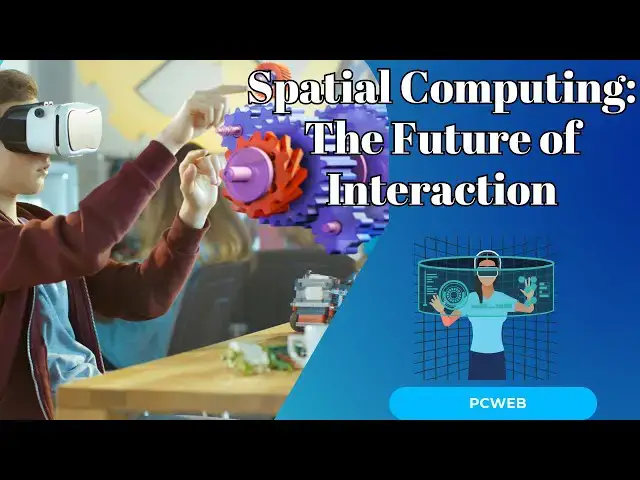

Spatial Computing: The Future of Interaction and Innovation
Aug 19, 2024
Spatial Computing: The Future of Interaction and Innovation
Imagine a world where digital and physical realms blend seamlessly, creating a new dimension of interaction with technology. This is the essence of spatial computing, a transformative concept that is set to revolutionize how we perceive and engage with our surroundings.
Spatial computing refers to the use of digital tools to interact with the physical world in a more immersive and intuitive manner. By leveraging technologies such as augmented reality (AR), virtual reality (VR), and mixed reality (MR), spatial computing allows users to experience and manipulate digital information within a three-dimensional space. This not only enhances our interaction with technology but also bridges the gap between digital and physical experiences.
The value proposition of spatial computing lies in its ability to transform everyday tasks and professional workflows. From gaming and entertainment to education and healthcare, the applications of spatial computing are vast and varied. Imagine playing a game where the characters come to life in your living room, or attending a virtual class where you can interact with 3D models of historical artifacts. In the medical field, spatial computing enables surgeons to visualize and interact with complex anatomical structures, improving precision and outcomes.
At its core, spatial computing relies on a combination of sensors, cameras, and advanced algorithms to map and understand the physical environment. This data is then used to overlay digital content onto the real world, creating a hybrid experience. For instance, AR glasses can display navigation instructions directly in your line of sight, while VR headsets transport you to entirely new worlds without leaving your home.
One of the most exciting aspects of spatial computing is its potential to redefine human-computer interaction. Traditional interfaces like keyboards and touchscreens are being replaced by more natural and intuitive methods, such as gesture control and voice recognition. This shift not only makes technology more accessible but also opens up new possibilities for creativity and productivity.
As we continue to explore the potential of spatial computing, it is essential to consider the ethical and societal implications. Issues such as privacy, data security, and digital equity must be addressed to ensure that the benefits of this technology are realized by all.
Are you ready to embrace the future of spatial computing and experience a new level of interaction with your favorite electronics? Share your thoughts and join the conversation below.
See more:
The Future at Your Fingertips:The Power and Potential of Mobile Computing
https://youtu.be/E6jDveNbxOE
#FutureOfInteraction #SpatialRevolution #TechInnovation
Show More Show Less #Computers & Electronics
#Consumer Electronics
#Virtual Worlds
#Engineering & Technology
#Virtual Tours
#Virtual Reality Devices
#Augmented & Virtual Reality